


Steve Conn Honors His Father's Legacy with a Project Decades in the Making

Updated: Aug 18

Steve Conn has spent the last fifty years as a working piano player, session musician, and songwriter out of Pineville, Louisiana. Over that career he's toured and recorded with Kris Kristofferson, Bonnie Raitt, James Taylor, Emmylou Harris, Albert King, and Louisiana's own Sonny Landreth, picking up ten Grammy nominations and building his own catalog of records since 1984. But his newest project has nothing to do with that resume. It's a collection of his father's music: half-century-old reel-to-reel recordings of a Louisiana swing violinist named Peanut Conn, painstakingly restored and finally finished.
For Conn, it isn't just another release. It's a return to where everything started.
A Louisiana Beginning Rooted in Music

Growing up in Pineville, Conn was surrounded by music from an early age. But to understand what he grew up around, you have to start with his father's own story.
Vertis Roy "Peanut" Conn bought his first fiddle for fifty cents at age ten, and by sixteen he had walked across the Catahoula Swamp to Alexandria, where he landed a spot with a local band called Clark's Alexandria Hot Shots. The group's live variety show ran Monday through Friday on the brand new radio station KALB, pulling in over a hundred cards and letters a day from listeners, and by 1941 Peanut was gaining national attention as a Louisiana swing violinist, with Melody Maker magazine naming him one of the best in the South and Southwest.

That rise was cut short the following year when the Army drafted him and shipped him to the South Pacific, where he lost a leg during World War II. He came home to central Louisiana and, like so many from that generation, faced a different reality, but he kept playing, leading the Roy Conn Orchestra and smaller combos through dances, conventions, and night clubs for years afterward. Peanut Conn passed away in 1964 at just 45 years old, leaving behind a legacy his son was too young to fully understand at the time. Steve was only eleven.
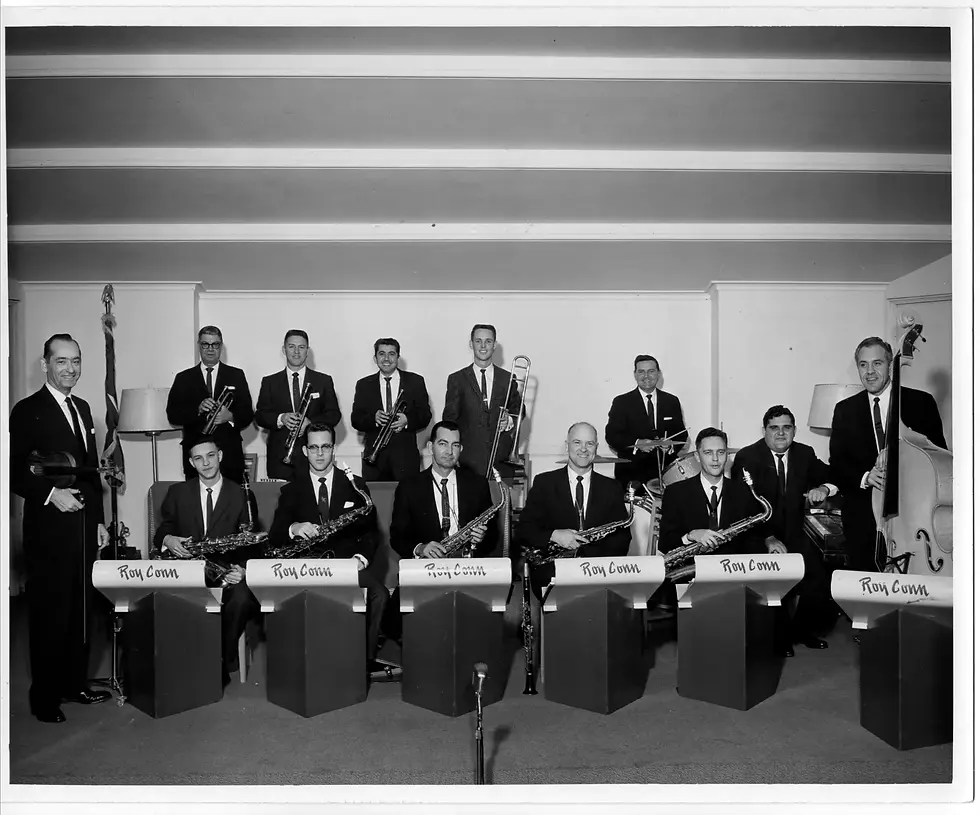
A Legacy Felt Before It Was Fully Heard

Despite growing up around music, Conn never truly experienced his father as a musician. He remembers the feeling of it: the late nights, the equipment carried in after gigs, even sitting on his father's lap as a small child while he pointed out middle C on the piano. But he never once heard his father play the violin the way others in Pineville did.
That part of his father's life came into focus years later.
The Tapes That Changed Everything
In his twenties, Conn came across a collection of deteriorating reel-to-reel tapes tucked in the back of his father's closet. What he found on them changed everything. There was a live radio broadcast from the early 1950s, a recording of his father's big band from the late fifties or early sixties, and a handful of home demos, just Peanut alone on guitar, singing songs he'd written himself.
Listening to them, Conn started to understand something he had only ever been told. His father wasn't just good. He was world-class.
"You could tell the joy he had," Conn shared during a recent interview with LCM Live.

That joy became the driving force behind a project that would take decades to complete.
Rebuilding Something That Was Almost Lost
Restoring the tapes took years. Conn spliced broken reels, pieced together fragments that had been wound backward, and slowly turned scattered fragments into finished songs.
"It was forensics all the way," he told LCM Live. "It took us a couple of years."
One discovery along the way stands out. A song called "Tell My Baby That I Love Her" was one Conn had grown up hearing and always assumed was an old standard. When a cousin asked to record it years later, Conn couldn't trace where it came from.

So he called Bill Clark, the last surviving member of his father's extended musical circle. Clark told him simply, "Peanut wrote that. We recorded it." Clark's son later went digging through his own father's old tapes and found the original recording sitting on top of the first box he opened in a storage unit, a moment Conn has described as giving him chills.
What began as discovery turned into something much deeper: a way to connect with a father he lost too soon, through the music they both shared. Conn didn't just restore what was there. He stepped into it, adding his own vocals and piano, along with acoustic bass and drums, to two of his father's original songs, "I'm In Love With You" and "Tell My Baby That I Love Her," creating something that bridges past and present.
"It's the closest I'll ever get to making music with my father."
Completing the Story

For someone who has spent a lifetime writing, recording, and performing at the highest level, this may be Conn's most meaningful work yet. Not because of where it will go, but because of where it came from.
The finished collection, fifteen tracks of Peanut Conn's Louisiana swing music in all, is now live on Steve Conn's website under the header "A Labor of Love, 50 Years in the Making." At its core, this project is about legacy: about taking something that was left unfinished and giving it the time, care, and respect it deserves.
And in doing so, Steve Conn isn't just telling his father's story. He's finally getting to hear it himself.
Follow Steve Conn
Follow Steve Conn to keep up with release updates and be part of a story that’s been decades in the making.
Love Stories Like This?
Subscribe to the Louisiana Country Music Newsletter for more artist spotlights, new releases, and stories from artists with Louisiana roots.
Follow your favorite Louisiana artists HERE.
This article is for informational and editorial purposes only. Details such as release dates, event information, and artist updates are subject to change. Featuring an artist does not imply any endorsement, partnership, representation, or business relationship unless explicitly stated. All trademarks, images, and music referenced remain the property of their respective owners.


Comments